
“想做一款高端礼盒”——几乎每个项目都从这句话开始,却很少有人说得清,从这句话到手里那只盒子,中间究竟要做哪些决定。"We want a premium gift box." Almost every project starts with that sentence — yet few can say what actually happens between the sentence and the box in your hand.
答案是六个环节:选盒型、选材、设计与结构、打样、量产与品控、交付与保护。每一步都有该问的问题、容易踩的坑,也都在悄悄决定最终的质感与成本。这篇把六步一次走完——读完它,你就能用内行的方式,和任何一家工厂谈清楚一只礼盒。The answer is six stages: choosing the structure, the board and surface, the design and fit, sampling, production with QC, and delivery with protection. Each has the right questions to ask, the traps to avoid, and a quiet influence on final feel and cost. This piece walks all six — so you can brief any factory about a gift box the way an insider would.
本文目录In this article
- 一只礼盒,要走完哪六步The six stages of a gift box
- ① 选盒型:结构是第一性的决定① Choose the structure: the first-principles decision
- ② 选材 / 选板:看不见的那层决定质感② Board & surface: the unseen layer sets the feel
- ③ 设计与结构:刀版、配合公差、内衬③ Design & fit: dieline, tolerance, interior
- ④ 打样:把决定握在手里④ Sampling: hold the decision in your hand
- ⑤ 量产与品控:把样品的标准复制几千遍⑤ Production & QC: copy the sample, thousands of times
- ⑥ 交付与保护:盒子要体面地抵达⑥ Delivery & protection: arrive looking the part
- 六步对照:每档预算该怎么取舍The six stages by budget tier
一只礼盒,要走完哪六步The six stages of a gift box
一只礼盒从想法到成品,几乎都会经过六个环节,顺序很难跳过:先定盒型,再定用什么板、什么面纸,然后是结构设计与刀版,接着打样确认实物,再进量产与品控,最后是交付与运输保护。From idea to finished box, a gift box almost always passes through six stages, and the order is hard to skip: first the structure, then which board and which surface, then structural design and the dieline, then sampling to confirm the physical piece, then production with quality control, and finally delivery and transit protection.
把六步看成一条流水线会有帮助:前一步的决定,会限制后一步的选择。盒型不确定,材料就没法定厚度;结构没画好,打样就在试错;样没敲定,量产的品控就没有基准。越往前的决定,影响越大、改起来越贵。It helps to see the six as one line: each step constrains the next. With no structure fixed, you can’t spec board thickness; with the structure undrawn, sampling becomes guesswork; with the sample unsigned, production QC has no benchmark. The earlier the decision, the larger its reach — and the more expensive it is to change later.
映佳 / 映捷把这六步放在同一个团队、同一个流程里:从设计、打样、量产到品控与交付一体衔接,正是为了不让决定在环节之间“掉链子”。下面逐步拆开。Incha / Yingjie keeps these six stages inside one team and one flow — design, sampling, production, QC and delivery joined end to end — precisely so decisions don’t fall through the cracks between hands. Let’s take them one at a time.
① 选盒型:结构是第一性的决定① Choose the structure: the first-principles decision
盒型不是“外观选项”,而是先于一切的结构决定。它决定了开合方式、生产工艺、装内衬的空间,甚至面纸的用量。先把盒型定下来,后面所有环节才有依据。The structure isn’t an "appearance option" — it’s the structural decision that comes before everything else. It sets how the box opens, the production method, the room for an interior, even how much wrap is used. Fix the structure first, and every later stage has something to stand on.
常见的几类盒型The common families
- 天地盖:上下两件套盖,经典、稳重,开箱有仪式感,适合大多数礼品场景。Lid-and-base: a two-piece box with a lift-off lid — classic, composed, with a sense of ceremony on opening; suits most gifting.
- 磁吸翻盖:一侧磁石吸合,翻盖式开合,合盖那一下的“吸附感”是它的记忆点。Magnetic flap: magnets on one edge, a hinged lid — the soft pull of the close is its signature moment.
- 抽屉盒:内盒抽拉,像火柴盒,适合分层呈现或多件组合。Drawer box: an inner tray that slides out like a matchbox — good for layered presentation or multi-piece sets.
- 书型盒:仿精装书翻开,适合需要“故事感”或图文呈现的产品。Book-style box: opens like a hardback — for products that want a narrative or printed spread inside.
- 抽屉 / 对开 / 厚边盒:更高克重的对裱板、更扎实的手感,常见于手工裱制与旗舰礼盒。Drawer, double-door and thick-wall boxes: heavier laminated board and a more solid feel — common in hand-mounted and flagship gifting.
选哪一种,不靠“好不好看”,而靠三个更实在的问题:里面装什么(重量、件数、易碎与否)、希望开箱是什么节奏(一次掀开还是层层展开)、以及预算落在哪一档。Which one isn’t a matter of looks but of three more concrete questions: what goes inside (weight, number of pieces, fragility), the rhythm you want on opening (one lift or a layered reveal), and which tier the budget sits in.
② 选材 / 选板:看不见的那层决定质感② Board & surface: the unseen layer sets the feel
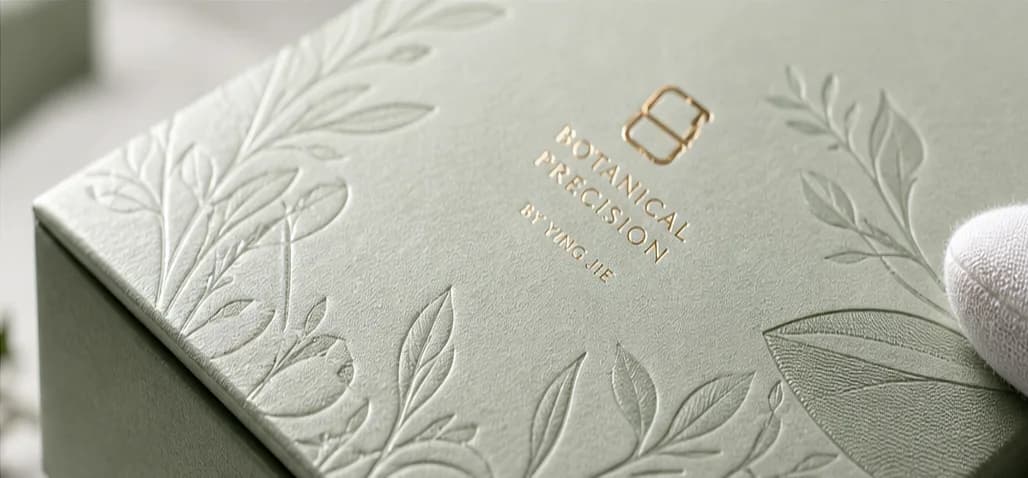
一只精装礼盒,其实是“两层”:里面是结构用的灰纸板,外面是裱上去的面纸。灰板负责好用,面纸负责好看。这一步要同时定下这两层。A rigid gift box is really two layers: a gray board core for structure, and a surface paper mounted on the outside. The board makes it feel good; the wrap makes it look good. This stage fixes both.
先定板:挺度才是手感的来源The board first: stiffness is where feel comes from
“拿在手里有没有分量、压一下塌不塌”,答案几乎都在灰板,而且关键不是单纯的克重,而是挺度(抗弯能力)与厚度的匹配。重磅礼盒常用两层及以上灰板对裱,做出厚边与扎实的开合手感。Whether a box has heft in the hand, whether it caves under a thumb — the answer is almost always the gray board, and the key isn’t GSM alone but stiffness (resistance to bending) matched to caliper. Heavy gift boxes often laminate two or more plies of board to build a thick wall and a solid open.
这里有一个被低估的差别:板是外购还是自产。映佳集团自 1987 年起自产灰板,厚度 1.0–4.0mm 可选。源头自产意味着同一批订单的挺度、厚度公差和颜色更稳定——样品好看不难,难的是量产不漂移。板材的取舍我们单独写过一篇完整指南。There’s an underrated distinction here: whether the board is bought in or milled in-house. The Incha group has milled its own gray board since 1987, available in 1.0–4.0mm. Owning the source means stiffness, thickness tolerance and color stay steadier across a run — a good sample isn’t hard; what’s hard is volume that doesn’t drift. We’ve written a full guide on choosing board.
再定面:好看,也要好裱、好印Then the surface: it must wrap and print well, too
面纸决定了颜色、纹理与第一触感。常见有三类方向:The wrap decides color, texture and first touch. Three common directions:
- 特种纸 / 艺术纸:纹理与触感丰富,质感天花板高,但部分纸张对印刷与烫金的还原有讲究。Specialty / art papers: rich texture and touch, the highest ceiling for feel — though some stocks are particular about how print and foil render.
- 白卡 / 铜版:印刷还原度高、成本可控,适合大面积彩印或对色彩要求高的画面。Ivory or coated card: high print fidelity at a controllable cost — good for large color areas or images that demand accuracy.
- 再生纸 / 牛皮系:偏自然、环保叙事的质感,适合主打可持续与素雅的品牌。Recycled or kraft stocks: a natural, sustainability-led texture — suited to brands leaning quiet and eco-minded.
③ 设计与结构:刀版、配合公差、内衬③ Design & fit: dieline, tolerance, interior
盒型和材料定了,接下来是把它“画出来、合得上”。这一步是平面创意之外的工程部分,做不好,再美的设计也装不进盒子。With structure and material set, the next step is to draw it and make it fit. This is the engineering beside the graphic design — get it wrong, and the prettiest layout won’t go into the box.
刀版(Dieline)The dieline
刀版是盒子的展开图与裁切、压痕路径——印刷、裱合、成型都照它走。一份严谨的刀版会预留出血、压痕位、裱纸的包边量,这些都是设计稿之外、却决定成败的细节。The dieline is the box’s flat layout with its cut and crease paths — print, wrapping and forming all follow it. A rigorous dieline reserves bleed, crease positions and the turn-in for the wrap — details outside the visible design that nonetheless decide whether it works.
配合公差(Fit)Fit and tolerance
“盒盖盖上去松还是紧”,靠的是公差。天地盖要预留盖与底的间隙,磁吸要算上磁石与板厚,抽屉要兼顾抽拉顺滑与不松垮。合适的松紧,是高级感里最容易被忽略的一项。Whether a lid sits loose or snug comes down to tolerance. Lid-and-base needs a gap between lid and tray; magnetic boxes must allow for magnet and board thickness; a drawer must pull smoothly without going slack. The right tightness is one of the most overlooked parts of a premium feel.
内衬与内托The interior and cradle
内衬让产品在盒里“零晃动”,也撑起了开箱的层次。EVA、纸浆模塑、绒布内托、卡纸内托各有质感与成本,要按件数、重量与易碎程度来选。内件不动,开箱时才是工厂里那个状态——这一点在出口运输里尤其关键。内衬这一块我们也有专门的指南。The interior holds the product with zero rattle and gives the unboxing its layers. EVA, molded pulp, velvet trays and card cradles each carry their own feel and cost, chosen by piece count, weight and fragility. If the interior doesn’t move, the open arrives in the state it left the factory — which matters most of all in export transit. We keep a dedicated guide on interiors too.
④ 打样:把决定握在手里④ Sampling: hold the decision in your hand
前面所有的选择——板、纸、结构、公差、内衬——到这一步才第一次变成“摸得着的实物”。屏幕上再美的渲染,都替代不了一只能上手的样。打样的意义,就是在量产前把问题暴露出来、改在纸上而不是改在几千只成品上。Every choice so far — board, wrap, structure, tolerance, interior — becomes a physical object for the first time here. No render, however beautiful on screen, replaces a sample you can pick up. The point of sampling is to surface problems before volume — to fix them on one piece, not on several thousand finished boxes.
样要看什么What to check on a sample
- 手感与分量:挺度够不够、开合顺不顺、合盖那一下对不对。Feel and heft: enough stiffness, a smooth open, the right sensation as it closes.
- 颜色与工艺:印刷色、烫金、UV、压纹的实际效果,和屏幕、色卡的差距。Color and finishing: how print color, foil, UV and embossing actually land versus screen and swatch.
- 配合与内衬:盖松紧、抽拉顺滑、内件是否真的“零晃动”。Fit and interior: lid tightness, drawer pull, and whether the interior truly holds zero rattle.
- 装载验证:把真实产品放进去,确认尺寸、缓冲与取放都合理。Load test: place the real product inside and confirm dimensions, cushioning and easy retrieval.
打样通常不止一轮。第一轮确认大方向,后续微调公差、颜色与工艺。把要确认的点一次列清楚,能显著减少来回的轮次。打样有白样、结构样、量产样等不同形式,各自验证不同的东西,我们专门写过一篇。Sampling rarely stops at one round. The first confirms direction; later rounds fine-tune tolerance, color and finishing. Listing every point to verify up front cuts the number of back-and-forths noticeably. Samples come in forms — white mock-up, structural, pre-production — each verifying something different; we’ve given that its own piece.
⑤ 量产与品控:把样品的标准复制几千遍⑤ Production & QC: copy the sample, thousands of times
量产真正的难点,不是做出一只好盒子,而是把那只签样的标准,稳定地复制几千上万遍。这一步考验的是流程与品控,而不只是手艺。The real difficulty of volume isn’t making one good box — it’s copying the signed sample’s standard, stably, thousands of times over. This stage tests process and quality control, not craft alone.
量产里最容易漂移的几处Where volume most easily drifts
- 颜色一致性:不同批次纸张、油墨与机台状态,会让色彩在批与批之间漂移。Color consistency: paper batches, ink and press condition let color drift from run to run.
- 板材一致性:外购板的厚度公差与密度不稳,会让挺度和盖的松紧忽松忽紧。Board consistency: unstable caliper and density in bought-in board make stiffness and lid fit wander.
- 裱合与成型:起泡、翘边、对位偏差,往往在量产的速度下才暴露。Wrapping and forming: bubbles, lifting edges and registration drift tend to appear only at production speed.
- 工艺稳定性:烫金、UV、压纹的深浅与位置,需要全程盯住才不走样。Finishing stability: the depth and position of foil, UV and embossing need watching throughout to stay true.
应对的办法,是以签样为基准的全程品控:上机前比对签样,过程中抽检关键尺寸与颜色,出货前再做终检。映佳 / 映捷自 2001 年起通过 ISO 9001 质量管理体系,并把设计、打样、量产、品控放在一体的流程里——前面提到的“自产灰板”在这里也帮上忙:源头稳定,量产的挺度与色差风险就更可控。The countermeasure is QC against the signed sample, end to end: compare to the signed sample before the press, spot-check key dimensions and color in process, and run a final check before shipping. Incha / Yingjie has held ISO 9001 quality management since 2001, and keeps design, sampling, production and QC in one integrated flow — and the self-milled board mentioned earlier helps here too: a steadier source means more controllable stiffness and color risk in volume.
⑥ 交付与保护:盒子要体面地抵达⑥ Delivery & protection: arrive looking the part
最后一步常被当成“打包发货”,但它其实和前面五步同样重要:一只到货塌边、受潮、内件松动的漂亮盒子,质感等于归零。The final step is often treated as "pack and ship," but it matters as much as the five before it: a beautiful box that arrives crushed, damp or rattling reads as zero quality.
呈现型礼盒(也就是会被拍照、被分享的那一只)通常会再装进外层瓦楞运输箱里发运。要让它体面抵达,得把三件事一起规划:A presentation box — the one that gets photographed and shared — usually ships packed inside an outer corrugated carton. To land it intact, three things must be planned together:
- 结构挺度:足够的灰板挺度(必要时对裱加厚)抵抗堆叠与压缩。Structural stiffness: enough board stiffness — laminated thicker where needed — to resist stacking and compression.
- 内衬固定:定位内托让内件零晃动,运输振动下不移位、磁吸不自开。A fixed interior: locating trays so the contents don’t move, magnets don’t spring open under vibration.
- 外箱与缓冲协同:呈现盒、外层瓦楞箱与缓冲材一起决定到货状态,要一并设计。Outer carton and cushioning together: the presentation box, its outer carton and cushioning jointly decide arrival condition — design them as one.
需要说明的是,映佳 / 映捷做的是呈现型的高端纸盒,不是瓦楞运输纸箱本身;但我们会把内衬、外箱保护与装箱方式一起纳入规划,让“被看见”的那只盒子安全上路。出口运输的具体应对,另有一篇专文。To be clear: Incha / Yingjie makes presentation-grade rigid boxes, not the corrugated shipping cartons themselves; but we plan the interior, outer protection and packing method together, so the box that gets seen travels safely. The specifics of export transit have their own dedicated piece.
六步对照:每档预算该怎么取舍The six stages by budget tier
同样一只礼盒,落在不同预算档位,六个环节的取舍会很不一样。下面是一份通用的参考——不是定价表,而是帮你判断“你想要的质感,大概对应哪一档配置”。具体仍以你的产品和打样为准。The same gift box, in different budget tiers, makes very different trade-offs across the six stages. Below is general guidance — not a price list, but a way to judge which tier of build roughly matches the feel you want. Your product and the sample are the final word.
| 环节Stage | 入门Entry | 主流Mainstream | 旗舰Flagship |
|---|---|---|---|
| 盒型Structure | 薄壁天地盖 · 折叠式Thin-wall lid-base · integrated folding | 天地盖 · 翻盖 · 书型Lid-base · flip-top · book | 厚边精装 · 对开 · 手工裱制Thick-wall rigid · double-door · hand-mounted |
| 板材Board | 轻量灰板 / 单层Light single-ply board | 中重灰板 800–1200gMid-heavy board, 800–1200g | 对裱厚边 1200g+Laminated thick-wall, 1200g+ |
| 面纸Surface | 白卡 / 铜版彩印Coated card, full-color | 特种纸 + 单一工艺Specialty stock + one finish | 特种纸 + 多重工艺Specialty stock + layered finishes |
| 内衬Interior | 卡纸内托Card cradle | EVA / 纸浆模塑EVA / molded pulp | 绒布定位 · 多层呈现Velvet-located · multi-layer |
| 打样Sampling | 基础确认Basic confirmation | 结构 + 工艺样Structural + finishing sample | 多轮打磨细节Multiple rounds, detail-tuned |
| 手感目标Feel target | 干净、得体Clean, presentable | 挺括、有质感Crisp, with texture | 扎实、有分量、耐看Solid, weighted, lasting |
读这张表的正确方式,不是“越往右越好”,而是把你的产品价值、使用场景和预算放在一起,找到相称的那一档。一只装平价产品的盒子做成旗舰配置,反而显得用力过猛;合适,永远比夸张更有质感。The right way to read this table isn’t "further right is better" — it’s to place your product’s value, its use and your budget together, and find the tier that matches. A flagship build around an everyday product reads as trying too hard. Fit, always, carries more quality than excess.
常见问题FAQ
采购前最常被问到的几个问题。The questions buyers ask most before they commit.
做一款高端礼盒大概要多久?How long does a premium gift box take?
同样的盒子,价格为什么差这么多?Why do quotes for the "same" box vary so much?
下单前能先看到实物样吗?Can I see a physical sample before ordering?
我还没定盒型,能直接开始吗?I haven’t picked a structure yet — can we still start?
礼盒能做到环保吗?Can a gift box be eco-friendly?
设计、打样、生产要找不同的供应商吗?Do design, sampling and production need different suppliers?
有产品在手,想把这六步走成一只真盒子?Have a product in hand and want to walk these six stages into a real box?
把产品、使用场景、预算档位和心里的盒型方向告诉我们,映捷会从选型、选材、结构到打样一路陪你定下来,并用实物样让你确认每一处手感,再进量产。Tell us the product, the use, the budget tier and any structure you have in mind — Yingjie will walk you from structure and material to design and sampling, confirm every point of feel with a physical sample, and only then move to volume.
一对一回复 · 初步可行性意见 · 参考样片清单与时间表Direct reply · Feasibility notes · Sample list · Indicative timeline