
“这只盒子用的什么纸?”——这是采购时最常被问、也最容易答偏的一个问题。因为一只精装盒往往不是“一种纸”,而是两层各司其职的纸叠出来的。"What paper is this box?" — it’s the question buyers ask most, and the one most easily answered wrong. A rigid box is rarely "one paper"; it’s usually two layers, each with its own job.
灰板、白卡、黑卡、艺术纸、特种纸、牛皮——它们不是互相替代的选项,而是各有所长的角色。读懂谁负责挺度、谁负责颜值、谁该印满图、谁靠肌理说话,你才不会把预算花在错的那一层。Gray board, ivory card, black card, art paper, specialty stock, kraft — these aren’t interchangeable options but roles with different strengths. Once you know which carries stiffness, which carries the look, which takes a full print and which speaks through texture, you stop spending budget on the wrong layer.
本文目录In this article
先分清「板芯」与「面纸」First: structural core vs. printed face
理解材质的第一步,是把一只精装盒拆成两层:板芯(结构内芯)和面纸(裱在外面的那层)。它们做的是完全不同的两件事。The first step in understanding stock is to split a rigid box into two layers: the core (the structural board inside) and the face (the wrap mounted on the outside). They do two entirely different jobs.
板芯负责好用,面纸负责好看。板芯决定盒子的挺度、分量与开合手感——它通常是灰板,你最终看不到它。面纸决定盒子的颜色、肌理与印刷效果——它是你的手指真正触到、眼睛真正看到的那一层。把这两件事分开,材质的选择立刻清晰一半。The core makes a box feel good; the face makes it look good. The core sets stiffness, heft and the feel of every open — it’s usually gray board, and you never see it. The face sets color, texture and how print lands — it’s the layer your fingers actually touch and your eyes actually read. Separate these two jobs and half of the material choice becomes obvious.
- 板芯(结构):要的是挺度与厚度,不要求好看。绝大多数是灰板,也可以是密度板等其他基材。Core (structure): wants stiffness and caliper, not looks. Almost always gray board, occasionally other substrates.
- 面纸(表面):要的是颜色、肌理与印刷表现。白卡、黑卡、艺术纸、特种纸、牛皮,比拼的都是这一层。Face (surface): wants color, texture and print performance. Ivory, black card, art paper, specialty stock and kraft all compete on this layer.
- 轻量折叠彩盒是个例外——那类盒“一张纸到底”,面纸即盒身;映捷专注以灰板为芯的精装结构,白卡在这里主要作为面纸与内卡出场。Light folding cartons are the exception — there the face is the body; Yingjie focuses on rigid structures with a gray-board core, so ivory card appears here mainly as a face paper and for inner cards.
板芯里的两种核心纸The core stocks
板芯比拼的不是颜值,而是“撑不撑得住”。两种最常见的角色:The core doesn’t compete on looks — it competes on holding up. Two roles dominate:
灰板(灰纸板)——结构的默认答案Gray board — the default core
灰板由回收纸纤维高压压制而成,断面呈均匀灰色。它是绝大多数精装盒、硬盒、厚边礼盒的骨架,几乎决定了一只盒子的挺度与分量。一只盒子是否“站得住、压不塌”,答案往往就在这层看不见的板里,而不在花哨的面纸上。Gray board is pressed from recycled paper fibre under high pressure, with an even gray cross-section. It’s the skeleton of nearly every rigid box, hardbox and thick-wall gift box, and it sets a box’s stiffness and heft almost single-handedly. Whether a box "stands up and won’t cave" is usually answered by this unseen board, not by a flashy wrap.
它也是少数能从“原料一端”锁住质感的环节。映佳集团自 1987 年起自产灰板,厚度覆盖 1.0–4.0mm,可按盒型与产品重量选配;自产意味着同批订单的挺度、厚度与颜色更稳定。想深入它的磅数、厚度、挺度与对裱,灰板那篇有完整一章。It’s also one of the few places where quality can be locked from the raw-material end. The Yingjia group has milled its own gray board since 1987, across 1.0–4.0mm, chosen to suit structure and product weight; milling in-house keeps stiffness, caliper and color steadier across a run. For its weight, caliper, stiffness and lamination in depth, the gray-board piece has a full chapter.
白卡——能当面纸,也能当轻盒身Ivory card — both a face and a light body
白卡是一种挺度尚可、表面适合直接印刷的厚纸。行业里它身份“两栖”:既可作面纸裱在灰板外,也可在轻量折叠盒里“一张纸到底”;在映捷的精装线中,它主要担任面纸与内卡的角色。它的优势是干净、可印性好、成本可控;想要厚重精装盒的分量感,则仍需靠灰板做芯。Ivory card is a thick, semi-stiff stock with a surface that prints well directly. Across the industry its role is amphibious — a face mounted over board, or "one paper throughout" in a light folding carton; in Yingjie’s rigid line it serves mainly as a face paper and for inner cards. Its strengths are a clean surface, good printability and controllable cost; for the heft of a thick rigid box, you still want gray board as the core.
面纸里的四种角色The face papers
面纸是品牌真正被看见、被摸到的那一层。除了能身兼面纸的白卡之外,常用的还有这四类——它们各自代表一种不同的“表达方式”:The face is the layer the brand is actually seen and felt through. Beyond ivory card (which doubles as a face), four more are common — each a different way of expressing a brand:
- 黑卡:纸浆整体染黑、断面也黑的纸。它的高级感来自“深而沉”的底色,最适合烫金、烫银、UV 等浅色工艺——深底反衬亮箔,对比强烈。但黑卡不适合满版彩印:深底吃光,普通油墨印不出鲜艳颜色。Black card: stock dyed black through the pulp, black on the cut edge too. Its premium feel comes from a deep, settled base, ideal for gold/silver foil and UV — a dark ground throws bright foil into sharp contrast. But black card won’t take full-color print: the dark base swallows light, and ordinary inks can’t read brightly on it.
- 艺术纸:带肌理、带色彩、带触感的高端涂布或非涂布纸,种类极广(布纹、刚古、触感膜质感纸等)。它靠肌理与手感说话,未印刷就已自带格调,是品牌“质感叙事”的主力面纸。可印性因纸而异,许多艺术纸更适合烫印、压凹凸而非满版彩印。Art paper: textured, colored, tactile premium stocks — coated or uncoated — in a vast range (laid, antique, soft-touch and more). It speaks through texture and feel, carrying character before anything is printed, and is the workhorse face for a brand’s tactile story. Printability varies by paper; many art stocks suit foiling and embossing better than full-color print.
- 特种纸:广义上包含艺术纸,但更常用来指那些有特殊效果的纸——珠光、金属、植绒、半透等。它适合做“点睛”,在局部制造惊喜;用在对的地方很出彩,全用则容易过。Specialty paper: broadly overlaps with art paper, but more often names the special-effect stocks — pearlescent, metallic, flocked, translucent. It works as an accent, creating a surprise in one spot; striking used in the right place, easily too much used everywhere.
- 牛皮纸:未漂白或浅漂的纸,自带原色与纤维感,传递“自然、质朴、可回收”的调性。它是环保与手工品牌偏爱的面纸;其本色限制了印刷的鲜艳度,但这恰恰是它的语言——克制、不张扬。Kraft: unbleached or lightly bleached stock with a natural color and visible fibre, reading "natural, honest, recoverable." It’s a favorite face for eco and artisanal brands; its base color limits print vividness — but that restraint is precisely its language.
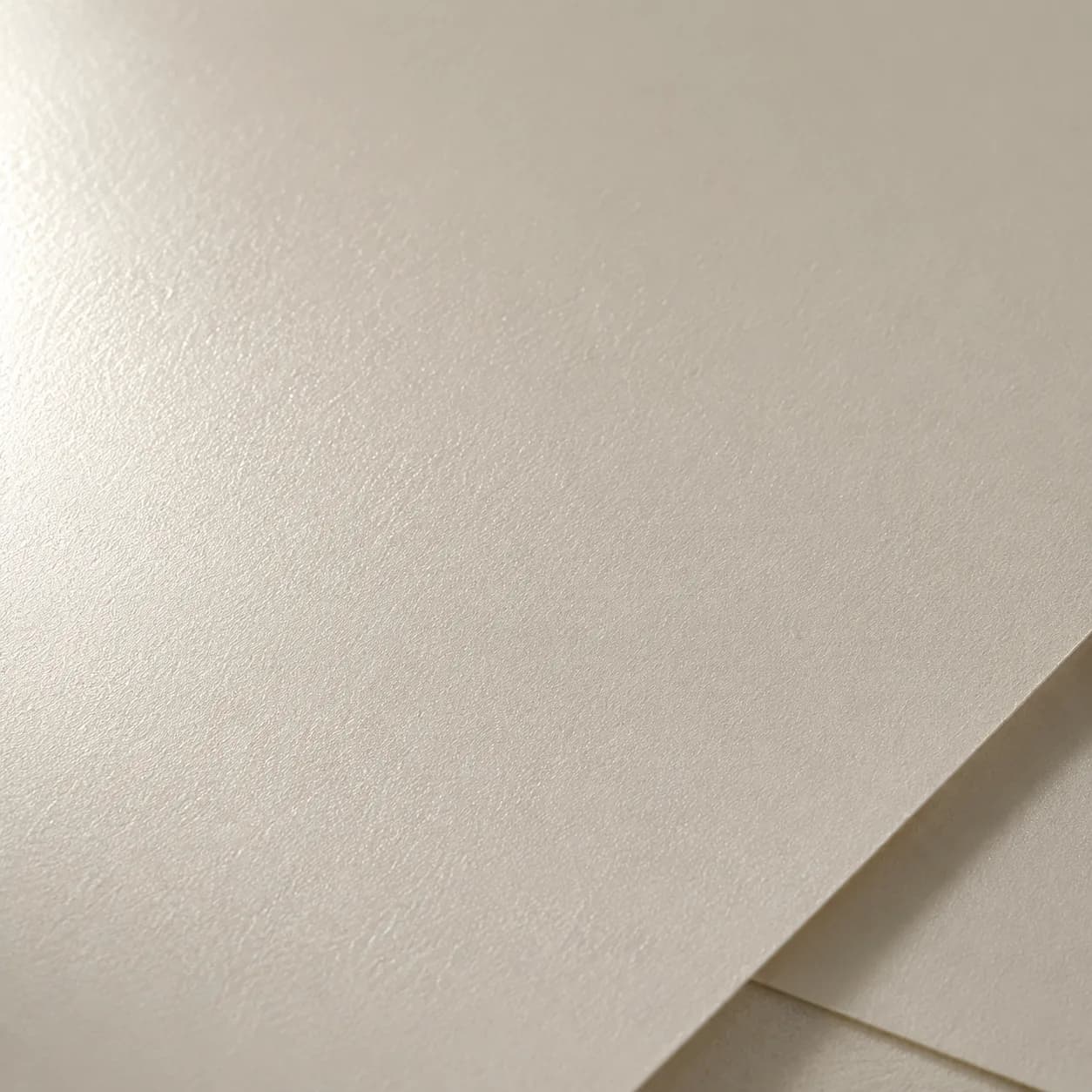
如何搭配:把面纸“裱”到板上How they pair: mounting face over board
前面把材质拆成两层,这里要把它们合回去——工艺上叫裱(裱合):把选好的面纸,用胶贴合到灰板芯的外面,做成你最终拿到的那只盒子。一只“1000 克的黑卡精装盒”,准确说是灰板做芯、黑卡作面裱在一起的结果,而不是“一整张黑卡”。Having split stock into two layers, here we put them back together — the process is called mounting (lamination of paper to board): the chosen face is glued over the gray-board core to make the box you finally hold. A "1000gsm black-card rigid box" is, precisely, a gray-board core with a black-card face mounted together — not "a single sheet of black card."
搭配的逻辑因此变得清楚:先按结构需求定板芯,再按品牌叙事选面纸。The logic of pairing then becomes clear: spec the core for the structure first, then choose the face for the brand story.
- 先定板芯:产品越重、盒型越大,灰板的挺度与厚度(必要时对裱)就要越足。这一步与“好看”无关,只关“撑不撑得住”。Core first: the heavier the product and the larger the box, the more board stiffness and caliper you need (laminated where required). This step is about holding up, not looking good.
- 再选面纸:想要深沉精致、靠烫印出彩,选黑卡;想要肌理与手感叙事,选艺术纸;想做局部惊喜,用特种纸点睛;想传达自然质朴,用牛皮;想要满版彩印清晰干净,白卡更稳。Face next: for a deep, refined look that shines through foil, black card; for a texture-and-touch story, art paper; for a local surprise, specialty stock as an accent; for a natural, honest read, kraft; for clean full-color print, ivory card is the safer ground.
- 让面纸与工艺相称:黑卡配亮箔、艺术纸配压凹凸、牛皮配单色或烫黑——纸与工艺的搭配,往往比单纯堆叠更出效果。Match face to finish: black card with bright foil, art paper with embossing, kraft with one-color or black foil — the pairing of stock and finish usually reads better than piling effects on.
工艺细节(覆膜、烫印、UV、压凹凸如何与不同纸材配合)属于后加工的范畴,那篇有更完整的展开。The finish details — how lamination, foiling, UV and embossing pair with each stock — belong to surface finishing, where the finishing piece goes further.
六种纸材一表读懂Six stocks, at a glance
把上面拆开讲的并到一张表里。请把它当作通用方向,而不是绝对结论——具体表现仍要以实物纸样和打样确认。Here the pieces above come into one table. Read it as general direction, not a verdict — actual behaviour still needs a physical swatch and a sample to confirm.
| 纸材Stock | 角色Role | 手感Feel | 可印性Printability | 最佳用途Best use |
|---|---|---|---|---|
| 灰板Gray board | 板芯Core | 挺、扎实Stiff, solid | 不外露 / 不印Hidden / not printed | 精装盒结构内芯Rigid-box structural core |
| 白卡Ivory card | 面纸 / 轻盒身Face / light body | 平滑、干净Smooth, clean | 佳(满版彩印)High (full-color) | 可印面纸 · 内卡Printable face · inner cards |
| 黑卡Black card | 面纸Face | 深沉、细腻Deep, refined | 弱(宜烫印 / UV)Low (foil / UV) | 深底礼盒 · 烫金烫银Dark-ground boxes · foiling |
| 艺术纸Art paper | 面纸Face | 有肌理、有格调Textured, characterful | 因纸而异Varies by stock | 质感叙事 · 压凹凸Tactile story · embossing |
| 特种纸Specialty | 面纸(点睛)Face (accent) | 特殊效果Special effect | 因纸而异Varies by stock | 珠光金属 · 局部出彩Pearl/metallic · accents |
| 牛皮Kraft | 面纸Face | 原色、质朴Natural, honest | 弱(宜单色 / 烫黑)Low (one-color / black foil) | 环保手工调性Eco & artisanal feel |
看出来了吗——表里没有一行写着“最高级”。最贵的纸不等于最对的纸。一只环保手工品牌用牛皮配烫黑,可能比满版烫金的黑卡更准;该选哪种,取决于你的品牌故事与这只盒子的用途,而不是价格高低。Notice — no row is marked "the most premium." The priciest paper isn’t the rightest paper. An eco-artisanal brand in kraft with black foil can read truer than a fully gilded black card; which to choose depends on your brand story and what the box is for, not on cost.
常见问题FAQ
采购前最常被问到的几个问题。The questions buyers ask most before they commit.
哪种纸最高级 / 最贵?Which paper is the most premium?
黑卡为什么不能满版彩印?Why can’t black card take full-color print?
一只盒子到底是“一种纸”还是“两种纸”?Is a box one paper or two?
我能凭屏幕上的图片选纸吗?Can I choose paper from on-screen images?
这些纸都环保吗?Are these papers eco-friendly?
不确定你的盒子该用哪种纸?Not sure which stock your box should use?
把产品、预算和你想传达的品牌调性告诉我们,映捷会从板芯到面纸为你配一套搭配方案,并尽量用实物样让你亲手确认手感与颜色。Tell us the product, the budget and the brand feel you’re after — we’ll pair a core and a face for you, and confirm feel and color in hand with a sample wherever we can.
一对一回复 · 初步可行性意见 · 参考样片清单与时间表Direct reply · Feasibility notes · Sample list · Indicative timeline